


Buy your weekday smoothies and get your weekend ones for free. (7 for the price of 5!)
WELLNESSWEEK

Last Updated: October 5, 2026
Is hemp seed oil non-comedogenic? Yes, hemp seed oil is widely considered non-comedogenic. That means it is unlikely to clog your pores. Its fatty acid profile sits close to your skin's own natural oils, so it absorbs rather than sits on the surface.
If you have ever read a skincare label and felt your eyes glaze over, you are not alone. Non-comedogenic is one of those phrases that gets printed on every second bottle without much explanation. So let us pull it apart, gently.
A non-comedogenic ingredient is one that does not block pores or trigger comedones. Comedones are the small bumps that form when oil, dead skin and bacteria get trapped in a hair follicle. Blackheads and whiteheads are both comedones. When a product is non-comedogenic, it is formulated to avoid that trap.
Here is what most guides get wrong: "non-comedogenic" is not a regulated term. That means the claim is only as honest as the brand behind it. At Hemp Skin, we would rather you understood the why than trusted a word on a box.
Below, we break down how hemp seed oil behaves on acne-prone and sensitive skin, how to patch test it, and how to spot a truly non-comedogenic product without a chemistry degree.
Hemp seed oil for acne works because it is light, low in heavy fats, and high in linoleic acid. Linoleic acid is a fatty acid that acne-prone skin often lacks. When your skin is short on it, sebum turns thick and sticky, and that is what clogs a pore.
So the oil does two jobs at once. It tops up the fatty acids your skin is missing, and it does so without leaving a greasy film behind.
What makes hemp seed oil different from heavier oils? A few things:
A common mistake is treating all oils the same. Coconut oil is rich and occlusive, and it ranks high on the comedogenic scale. Hemp seed oil sits at the other end. In practice, this means two oils can look identical in a bottle and behave nothing alike on your face.
One honest limitation: hemp seed oil is not a cure for acne. It will not clear hormonal breakouts on its own. Think of it as a supporting player, not the headline act.
Knowing how to use hemp seed oil on face matters more than the oil itself. The wrong method can undo all the good. The right one takes two minutes and feels like a small ceremony.
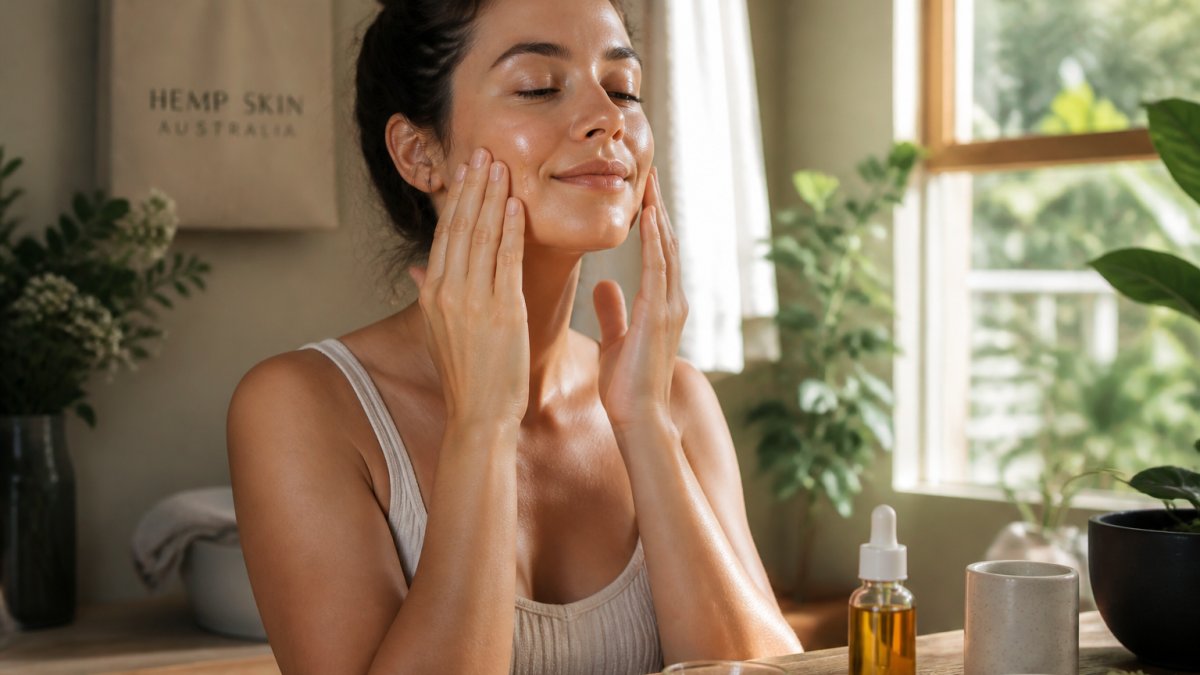
Here is our ritual, step by step:
For acne-prone skin, start with one drop at night only. Add more as your skin adjusts. For dry or mature skin, use it morning and night.
If you want a cleanser that already carries hemp seed oil, our Oil Cleanser is a gentle first step. It melts away makeup and sunscreen without stripping your barrier. Pair it with our Daily Face Oil for daytime, and the Nightly Face Oil for your evening wind-down.


A hemp seed oil patch test is the only way to know how your skin will react before you commit. Even natural oils can irritate sensitive skin. A patch test costs you nothing but a few days.
Here is how to do one properly:
The thing nobody tells you about patch tests is that reactions can be delayed. A spot that looks fine after an hour can flare up on day two. Give it the full 48 hours.
Skip the test if you have a known allergy to hemp or related plants. And if you are under dermatologist care for a skin condition, run any new product past them first. We mean that.
Hemp seed oil vs jojoba oil is a fair question, because both are light and both suit acne-prone skin. The real difference comes down to what each one does best.
Jojoba is technically a liquid wax, not an oil. It closely mimics human sebum, so it balances oil production. It is stable and long-lasting. Hemp seed oil is richer in omega fatty acids and is more soothing for redness and irritation.
Feature |
Hemp Seed Oil |
Jojoba Oil |
|---|---|---|
Texture |
Light, absorbs fast |
Light, wax-like |
Best for |
Calming redness, dry patches |
Balancing oily skin |
Key strength |
Omega fatty acids |
Sebum-like structure |
Shelf life |
Shorter, keep cool |
Longer, very stable |
So which one? If your main concern is redness and reactive skin, reach for hemp. If your skin is oily and you want balance, jojoba is a strong pick. Many people use both, and that is fine too.
For a blend that brings the two together, our Day & Night Duo pairs hemp seed oil with jojoba and olive squalane in one simple cycle.
Learning to read labels is how you stop guessing. The front of the bottle is marketing. The back is where the truth lives.
Start with the ingredient list, which runs from highest to lowest concentration. Then look for these signals:
Now the red flags. Heavy occlusive oils like coconut and wheat germ rank higher on the comedogenic scale. Denatured alcohol can dry and irritate. And a long list of fragrant essential oils can upset sensitive skin, even in a "natural" product.
Ratings you see online come from lab tests on rabbit ears decades ago, and they do not always match real skin. Use them as a rough guide, not gospel.
The most reliable test is still your own skin. Patch test, start slow, and pay attention to how your face responds over a week.
The search for clear skin can feel like a maze of conflicting advice. But the answer is often simpler than the shelves suggest. Hemp seed oil is non-comedogenic by nature, gentle and rich in the fatty acids that reactive skin craves. Used with care, it supports your barrier instead of fighting it.
At Hemp Skin, we craft hemp-based rituals for exactly this: skin that feels calm, nourished and clear. Our range is built on certified organic hemp seed oil, botanical infusions, and a little loving intention in every batch. Explore our face oils, cleansers and body care to build a routine that honours both your skin and your sense of calm.
Return to shop and find your ritual.
Yes, hemp seed oil is widely considered non-comedogenic, meaning it is unlikely to clog pores. Its lightweight texture absorbs quickly without leaving a heavy residue, so it supports a clear complexion while delivering hydration. Always patch test first to confirm it suits your unique skin.
Hemp seed oil does not clog pores for the vast majority of people. However, individual reactions can vary. If your skin is highly reactive or you are prone to congestion, introduce it slowly and monitor how your skin responds. A patch test on your inner arm or jawline for 24 to 48 hours is the safest way to check compatibility before applying it to your whole face.
Hemp seed oil is often recommended for acne-prone skin because it is non-comedogenic and rich in omega-3 and omega-6 fatty acids, which help calm inflammation and support the skin barrier. It will not strip natural oils or trigger excess sebum production. For best results, use it as part of a gentle routine and pair it with a non-comedogenic cleanser to keep pores clear and balanced.
Give any new facial oil at least two to four weeks of consistent use before judging results. During the first week, you may notice changes in hydration or texture. By week four, you should have a clearer picture of whether it calms, balances, or irritates your skin. If you experience persistent redness, breakouts, or discomfort, stop using it and consult a skin professional.