


Buy your weekday smoothies and get your weekend ones for free. (7 for the price of 5!)
WELLNESSWEEK

Last Updated: November 21, 2026
Quick Summary
The most common skincare mistakes for facial eczema are cleansing too often or with hot water, using stripping foaming cleansers, over-exfoliating, and layering too many actives at once. Fragrance and essential oils are the biggest triggers we see, so choose fragrance-free, gentle products and keep your routine to three or four items.
Facial eczema is a form of atopic dermatitis that leaves the skin on your face red, dry, itchy and reactive, and the products you reach for each day can either calm that sensitivity or feed it. At Hemp Skin, we see this constantly: people with the best intentions, layering product after product, wondering why their skin keeps rebelling.
Here is the part most guides get wrong. A flare is rarely caused by one dramatic thing. It creeps in through small daily habits, a hot shower here, a scented serum there, and your skin barrier slowly loses its footing. According to Allergy & Anaphylaxis Australia, sensitive and allergic skin reactions are frequently linked to repeated exposure to fragrances and preservatives found in everyday cosmetics.
Below, we walk through the nine most common skincare mistakes for facial eczema, plus the swaps that give reactive skin room to settle. The first five matter most, so start there.
Knowing which ingredients to avoid with eczema is half the battle. The short answer: fragrance, essential oils, drying alcohols, harsh exfoliating acids and strong preservatives are the usual suspects for reactive facial skin. But the longer answer is where the real relief lives, because ingredient lists can be tricky to decode, and what suits one sensitive face may still sting another.
Fragrance is the single biggest trigger we see in facial skincare. It hides in "parfum", "fragrance" and even in products marketed as natural, because essential oils are fragrance too. Lavender, citrus peel oils, peppermint and eucalyptus all smell beautiful and all carry irritant potential for compromised skin. The tricky part is that a product labelled "natural" or "botanical" can still contain essential oils that sting a flare. That is why we only use minimal essential oils specifically to help eczema and other sensitive rather then for scent.
Other ingredients worth a second look:
Watch out: some preservatives, like methylisothiazolinone, are known contact allergens, so it is worth checking ingredient lists if you react to a product.
Ingredient lists are ordered by concentration, so the first five or six ingredients tell you most of the story. If fragrance or alcohol appears near the top, put it back on the shelf. If you see a long list of plant extracts and essential oils, treat it with caution, even if the bottle looks like something from a herbalist's dream.
A simple rule: fewer ingredients, fewer surprises. Look for short lists built around emollients, humectants and barrier-supporting oils. Our hemp seed oil cleanser is a short formula built to cleanse gently.

If you want to go deeper on which plant oils suit reactive faces, our guide to the best oils for rosacea and sensitive skin is a good next read. And if you are drawn to the ritual of a calming mist, our rose floral water toner is alcohol-free and made for sensitive skin, a gentle reset before hydration.
Cleansing more than twice a day, or reaching for hot water, strips the skin barrier faster than almost any other habit. Lukewarm water and two gentle cleanses a day is the target for most facial eczema.
Hot water feels soothing in the moment. In practice, it dissolves the lipids that hold your barrier together, and your skin tightens and flushes minutes later. The same happens when you cleanse three or four times a day "just to feel clean".
What to do instead:
After cleansing, a calming, alcohol-free mist can help skin settle. Our rose floral water toner is made for exactly this moment, a gentle reset before hydration.
The article sets out a few simple cleansing rules for reactive facial skin.
Habit |
What to do instead |
|---|---|
Cleansing more than twice a day |
Cleanse morning and night, no more |
Using hot water |
Use lukewarm water, never hot |
Morning cleanse when skin feels calm |
Skip it, a splash of water is enough |
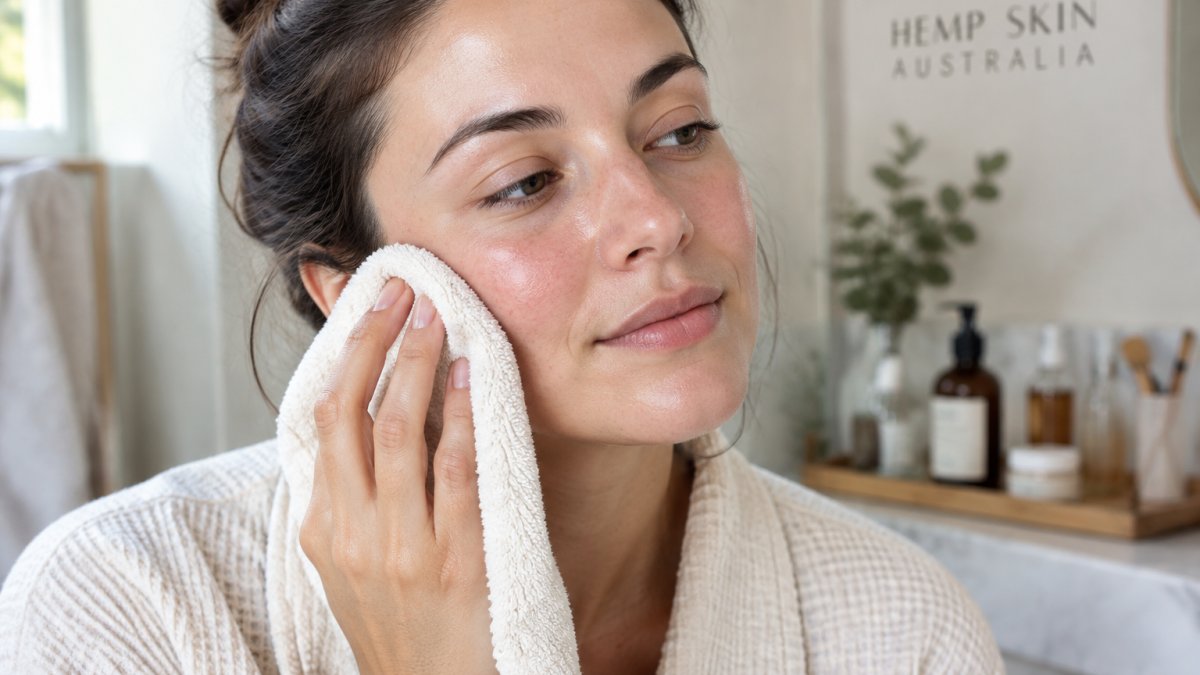
Rubbing dry with a towel |
Pat dry with a soft cloth, don't rub |
A gentle cleanser for facial eczema should clean without squeaking. If your face feels tight and dry after washing, the cleanser is too strong for your skin right now.
Foaming washes with strong surfactants are the usual culprit. They lift dirt and oil, then keep going, taking your barrier's natural moisture with them. For reactive faces, an oil-based or cream cleanser that melts makeup and sunscreen without stripping is the safer choice.
This is where we would start: our hemp seed oil cleanser is built to dissolve SPF and makeup gently. If you want the full ritual in one step, the two step cleanse kit pairs it with the rose toner.

Best for: reactive, tight-feeling skin that reacts to foaming washes. Skip if: your skin tolerates a simple gel cleanser comfortably.
Over-exfoliating is one of the fastest ways to turn sensitive skin into a full flare. Scrubs, acids and daily polishing remove skin cells your barrier is still trying to rebuild.
Physical scrubs with sugar, salt or crushed shells create tiny tears on skin that is already inflamed. Chemical exfoliants, even gentle ones, add up when used daily. During a flare, pause exfoliation entirely. When skin is calm, once a week at most, and never on the same day as a strong active.
Stacking actives is a common skincare mistake for facial eczema, and it usually backfires. Retinol, vitamin C, acids and essences layered together give reactive skin far more to process than it can handle.
Product layering feels productive. For eczema-prone skin, it often means you cannot tell what is helping and what is stinging. Strip back to three or four products: cleanser, hydrator, moisturiser and SPF. Add one new product at a time, and give it a week or two before adding another.
Learning how to moisturise eczema-prone skin comes down to timing and consistency. Apply moisturiser within a few minutes of cleansing, while skin is still slightly damp, to lock hydration in and support the skin barrier.
Emollient-rich products are your friend here. Look for ingredients that mimic skin's own oils, and apply morning and night, every day, not just when skin feels dry. After moisturising, a barrier-supporting face oil can seal everything in. Our daily face oil is a lightweight blend of hemp seed oil, jojoba and olive squalane designed to calm and nourish reactive skin.

Patch testing is the simplest safety step most people skip, and it is the best way to tell irritation from a true allergy. But it is also where many people go wrong, because a quick dab behind the ear for an hour is not enough. A proper patch test takes time, patience and a little ritual of its own.
Apply a small amount of the new product to a clean, dry area behind your ear or on your inner forearm. Leave it uncovered and undisturbed for 48 hours, avoiding water on that spot. Watch for redness, itching, swelling or a rash. If nothing appears, repeat the test on the same spot for another 48 hours, because some allergies take repeated exposure to show up. Only then introduce the product to your face, one new item at a time, with at least a week between new additions.
Watch out: a reaction can appear up to 72 hours after application, so if you notice anything unusual after the 48-hour mark, stop using the product and note the ingredient list.
Irritation tends to build gradually with repeated use, often showing up as dryness, tightness or a mild sting that worsens over days. An allergy often appears as a sharper reaction, sometimes spreading beyond where you applied the product, with redness, swelling or small blisters. If a reaction spreads or blisters, stop the product and speak to a pharmacist or doctor. Healthdirect's guide to contact dermatitis explains the difference clearly.
On flare days, simplify: cleanse gently with lukewarm water and a cream or oil cleanser, mist with an alcohol-free hydrator, moisturise while skin is still damp, and skip actives entirely. Remove makeup and SPF with an oil cleanser rather than wipes, which drag and sting. Shave gently with a clean blade and lukewarm water, and never on angry skin.
When to see a doctor for facial eczema: if skin cracks, weeps, swells or shows signs of infection, or if self-care is not settling a flare, get medical advice. Skincare supports your skin; it does not replace treatment.
Facial eczema asks for patience and a lighter touch, not more products. If you are ready to simplify your routine with gentle, plant-based care, explore our range of hemp-based cleansers, toners and face oils. Every formula is made to calm, nourish and reconnect you with your skin. Start with the essentials and let your barrier find its footing again.
The main culprits are fragrance, essential oils, drying alcohols, harsh foaming surfactants and strong acids. Many people also react to preservatives such as methylisothiazolinone. Read the full ingredient list rather than trusting a 'natural' or 'sensitive' label, because botanical extracts and essential oils can trigger facial eczema just as easily as synthetic fragrance. Keep a short list of products you know your skin tolerates, and introduce anything new one at a time.
Yes. Cleansing more than twice a day, or using hot water and a foaming cleanser, strips the skin's natural oils and weakens the skin barrier. That leaves facial eczema more reactive to everything that follows. Stick to a gentle cleanse morning and night with lukewarm water, and if you have exercised or worn sunscreen, use a soft oil-based cleanser rather than reaching for a stronger one.
At least twice a day, and again any time skin feels tight or dry. The trick is to apply moisturiser within a few minutes of cleansing, while skin is still slightly damp, so it seals in hydration. A lightweight face oil pressed over damp skin works well for facial eczema because it supports the skin barrier without a heavy occlusive feel. More frequent, thin layers usually beat one thick application.
Book an appointment if the rash is spreading, weeping, crusting or feels hot, if over-the-counter moisturisers and gentle cleansing are not helping after a couple of weeks, or if the itching is disrupting sleep. Facial eczema near the eyes deserves prompt attention. A doctor can confirm the diagnosis, rule out allergic contact dermatitis and discuss prescription options that sit alongside your gentle routine.
