


Buy your weekday smoothies and get your weekend ones for free. (7 for the price of 5!)
WELLNESSWEEK

Last Updated: November 10, 2026
Quick Summary
Dry brushing takes only a few minutes before you shower. Use a natural bristle brush on dry skin, sweeping gently toward the heart and starting at the feet. Pair each stroke with a slow breath, then shower and apply oil while your skin is still warm.
Dry brushing is a simple ritual that wakes up your body before the day begins. Using a natural bristle brush on dry skin, you gently sweep toward the heart, and many people find it lifts their energy and leaves them feeling more present. At Hemp Skin, we see dry brushing as the first breath of a slower, more intentional morning.
The practice sits at the heart of a body ritual. Gentle strokes stimulate the skin and invite the lymphatic system to move. Many Australians add it to their routine for a feeling of renewal, and a few minutes is often all it takes.
Dry brushing can also feel like a gentle exfoliant. Light, repeated strokes help lift dead skin cells, which can leave skin looking smoother and feeling softer.
Pairing your brushing with a moment of stillness is what makes it a ritual. Rather than rushing, try taking a slow breath with each stroke. That small pause turns a chore into a quiet start to the day.
You only need two things to begin: a dry brush and a nourishing oil. But the brush you choose shapes the whole ritual, so it is worth a moment of thought before you buy.
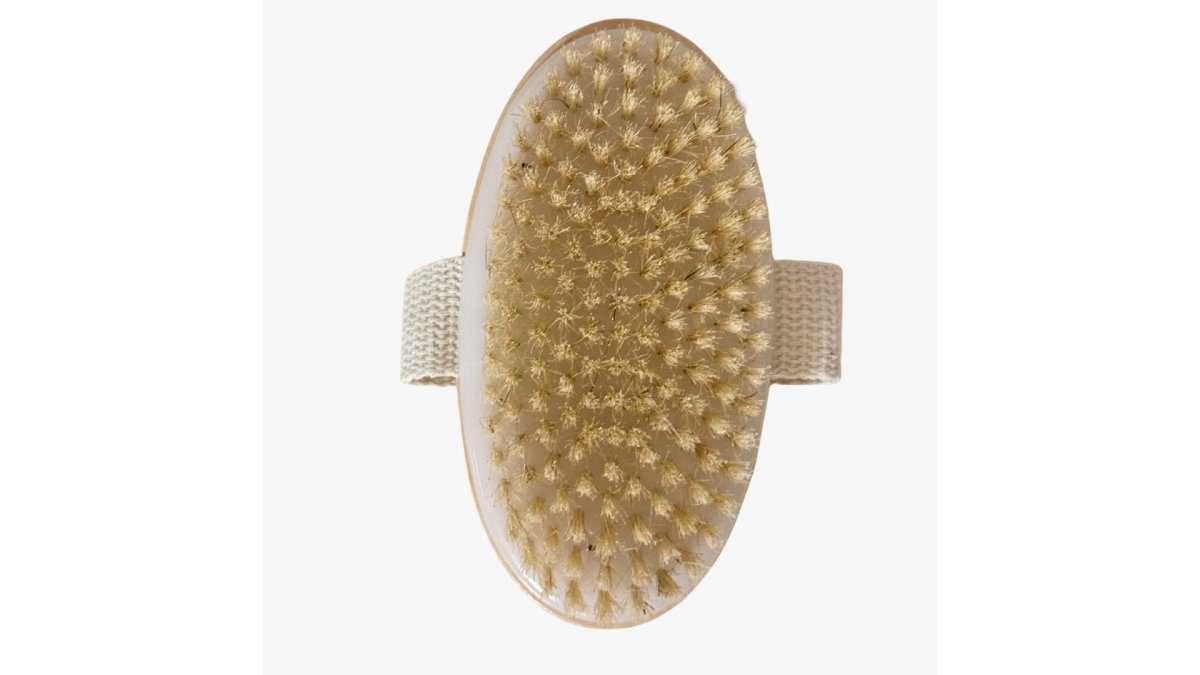
Start with a brush that has natural bristles and a comfortable handle, so you can reach your back and shoulders without strain. Our Natural Bristle Body Dry Brush is made with natural sisal bristles and an oval bamboo beechwood body. It offers a balance of firmness and comfort, so it feels effective but gentle enough for regular use.

Keep these points in mind when you choose a brush:
Most dry brushes fall into two camps. Natural bristles, sisal, boar, horsehair or plant fibres, tend to have a little more grip and a livelier feel on the skin. Synthetic bristles are often softer and more uniform, which some sensitive skins prefer. Many people prefer natural bristles for a more grounded feel, and choosing a brush with a natural material can feel like a kinder choice for the planet. Neither is wrong, but knowing the difference helps you choose with intention rather than habit.
If sustainability matters to you, look for a brush with a wooden or bamboo body and natural bristles, and check whether the maker says where the materials come from. A brush that is cared for can last well, which brings us to care.
A well-cared-for brush lasts longer and stays hygienic. Rinse it under warm water once a week to remove dust and dead skin cells. Then let it air dry flat, bristles facing down, away from direct sun. Never soak a wooden brush, as the body can warp and crack.
Watch out: if you skip the weekly rinse, dead skin and oil can build up in the bristles.
Replace your brush when the bristles start to bend or shed. Natural bristles are a more sustainable choice than many plastic alternatives, and choosing a brush made from responsibly sourced materials helps keep your ritual kind to the planet.
For the oil, choose something light that absorbs well after brushing. Oils that feel soothing on dry skin make a lovely pairing with the ritual. You will find more ideas in the section on natural body oils for post-brushing below.
Start with clean, dry skin before you shower. Work in the same order each morning so the movement becomes second nature.
Follow these steps:
Take your time with each stroke. Many people find that slowing down brings a sense of calm that stays with them for the whole morning.
Dry brushing is not suitable for every skin condition. If you have broken skin, a rash, active eczema or inflamed areas, skip those spots and check with a healthcare professional first. The same applies to sunburnt skin, fresh scars and any area that is swollen or tender.
If you have sensitive skin, patch-test a small area on your forearm before brushing the full body, and keep the pressure feather-light.
Watch out: redness that lingers after brushing, itching or any new irritation means it is time to ease off.
Pairing your brushing with a moment of stillness is what makes it a ritual. Rather than rushing, try taking a slow breath with each stroke, and notice the season you are in, lighter, quicker strokes in the warmer months, slower and more grounding ones in the cooler ones. That small pause turns a chore into a quiet start to the day.
A full-body session can take a few minutes. That is long enough to cover each area without rushing, and short enough to fit before a busy morning.
Beginners often start with two or three minutes and build up as the ritual feels natural. Longer sessions are not better. Gentle, consistent brushing matters more than the clock.
You might find a simple rhythm helpful, building up gradually as the ritual feels natural.
Here is a rough guide to timing and rhythm, drawn from the sections above.
| Stage | What to do | Time |
|---|---|---|
| Full-body session | Cover each area without rushing | A few minutes |
| Beginner start | Build up as the ritual feels natural | Two to three minutes |
| Typical sequence | Dry brush before showering | Three to five minutes |
| Gentle consistency | Regular brushing matters more than the clock | Daily |
The most rewarding sequence runs in three steps: brush, shower, oil. Brushing first lifts away loose skin, the shower rinses it clean, and oil seals in moisture while the skin is still soft.
Our Pre-Shower Luxe Body Oils are designed for the step before you shower. Massage a little into dry skin, then step into the water and let the botanical scent unfold around you.

If you want more guidance on this part of the ritual, our article on pre-shower body oil explains how the oil fits around your shower.
Try building your sequence like this:
The right oil makes your post-brushing moment feel nourishing. Look for oils with simple, plant-based ingredients that feel light on the skin.
Our Luxe Body Oil is blended with Australian Certified Organic hemp seed oil and botanicals that calm and restore, and it absorbs without leaving a heavy residue.
Here is how to pick an oil that suits you:
If you enjoy a little ritual with your morning coffee, our Limited Brew Luxe Body Ritual Duo pairs a gentle coffee polish soap with a coffee-infused body oil.
A well-cared-for brush lasts longer and stays hygienic. Rinse it under warm water once a week to remove dust and dead skin cells. Then let it air dry flat, bristles facing down, away from direct sun.
Replace your brush when the bristles start to bend or shed. Natural bristles are a more sustainable choice than many plastic alternatives, and choosing a brush made from responsibly sourced materials helps keep your ritual kind to the planet.
Watch how your skin responds over the first few weeks. Redness that lasts, itching or any new irritation means it is time to ease off. Skin that feels calm, soft and nourished is the sign your ritual is working.
Dry brushing is one of the simplest ways to bring a little more intention into your mornings. Start tomorrow with your brush, a few quiet breaths and two minutes of gentle strokes toward the heart.
If you are ready to begin, explore our range and choose the pieces that feel right for your ritual. Our Body Dry Brush is a lovely place to start.
Dry brushing can be a grounding part of your morning. Begin with a brush, a nourishing oil and a few minutes of stillness, then let the ritual grow with you.
Many people choose the morning because it wakes the body and sets a calm, intentional tone for the day. Brushing before your shower lets you rinse away loosened dead skin cells, and it pairs naturally with a body oil afterwards. Night brushing can feel just as soothing if your evenings are slower, so choose whichever time you will return to most consistently.
A session usually takes around five to ten minutes. Work slowly, from the feet upward toward the heart, using long gentle strokes. Rushing defeats the purpose of the ritual, so take a breath between sections. Keep the pressure light enough that your skin feels invigorated rather than sore or reddened.
Most people find that brushing once a day, or a few times a week, suits their skin. Begin with two or three sessions a week and see how your skin responds. If you notice redness, tenderness or irritation, reduce how often you brush and give your skin time to settle before continuing.
Brush first on dry skin, then shower, then apply body oil to damp or freshly towelled skin. This order clears away loosened skin cells before you nourish the skin underneath. Oil applied after brushing and bathing helps lock in moisture and leaves the skin soft and supple.
