


Buy your weekday smoothies and get your weekend ones for free. (7 for the price of 5!)
WELLNESSWEEK

Last Updated: 21 October 2026
Is hemp good for skin care? Yes, and the reason is simpler than the marketing around it suggests. Hemp seed oil is a lightweight, omega-rich botanical oil that supports the skin barrier, calms reactivity, and hydrates without the heaviness of richer oils. At Hemp Skin, we have built our whole range around it, so we know both its gifts and its limits.
Here is the honest version most guides skip: hemp seed oil is not a cure, and it is not the same thing as CBD. What it is, is one of the gentlest plant oils available to reactive and sensitive skin. Below, we walk through what it actually does, how to use it without overdoing it, and which skin types should patch test first.
Hemp seed oil for skin works mainly as a barrier ally. It is rich in linoleic and alpha-linolenic acid, two fatty acids that help keep the skin's outer layer supple and resilient. When the barrier is happy, water stays in and irritants stay out.
Linoleic acid is the quiet hero here. Skin that is prone to redness or breakouts often runs low in it, and replacing it through a botanical oil can help the surface feel softer and less reactive. Hemp seed oil also carries vitamin E, a natural antioxidant that helps protect against everyday environmental stress.
What it will not do is exfoliate, resurface, or bleach pigmentation. If you want those things, you need other ingredients. Hemp is the calm foundation, not the whole house.
Hemp oil for acne is worth trying if your breakouts come with tightness, redness, or a compromised barrier. Because hemp seed oil is low on the comedogenic scale and high in linoleic acid, it is less likely to clog pores than heavier oils like coconut. It can soothe the irritation that sits around active breakouts.
That said, acne is not one condition. Hormonal acne, fungal acne, and barrier-damage breakouts all respond differently. A common mistake is slathering on oil and expecting it to dry up pimples. It will not. Use it as a gentle cleanser or a light moisturising layer, and if breakouts are deep and painful, see a dermatologist.
Hemp seed oil vs CBD oil is the mix-up we see most. Hemp seed oil is pressed from the seeds and contains no meaningful cannabinoids. CBD oil is extracted from the flowers and leaves and does contain cannabidiol. They are different products with different jobs.
Hemp seed oil is a nourishing, fatty-acid-rich carrier oil. CBD oil is usually used for its calming, anti-inflammatory properties and is often far more expensive. If a label says "hemp oil" and the price is modest, it is almost certainly seed oil. Neither is better; they simply do different things. For daily barrier care, seed oil is the practical choice.
How to use hemp oil on face comes down to one rule: less than you think. Two to three drops is enough for the whole face and neck. More oil does not mean more hydration, it just means a greasy pillow.
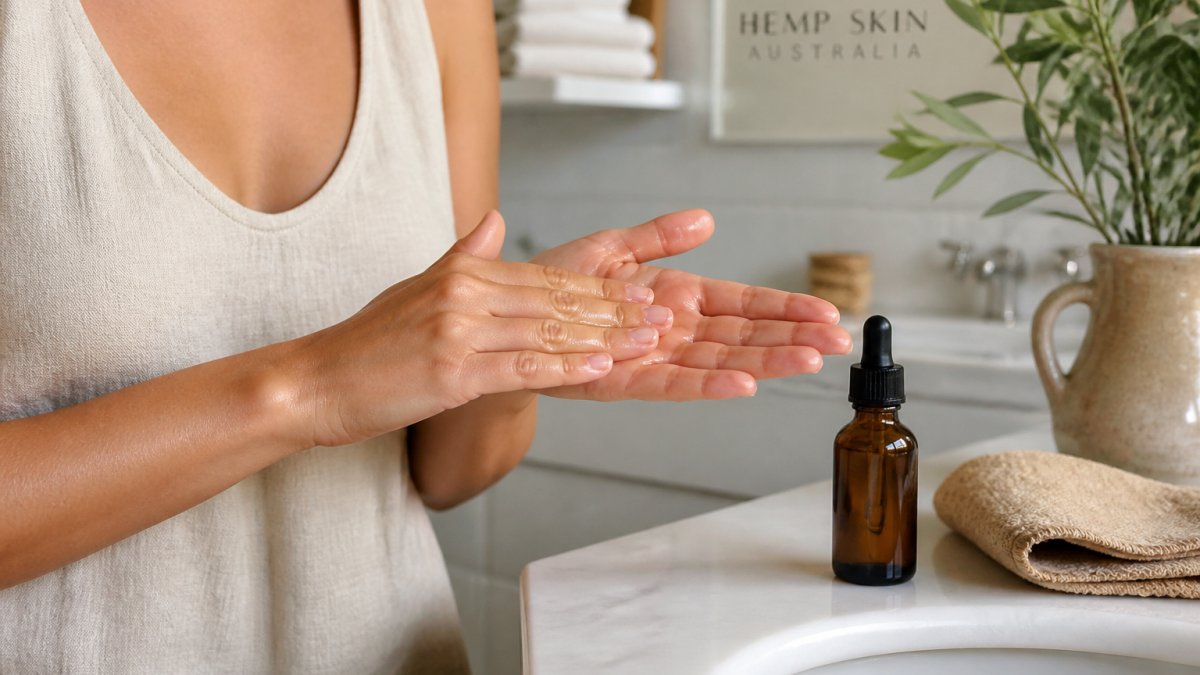
Our Daily Face Oil is built for exactly this rhythm, while the Nightly Face Oil leans into overnight restoration. If you wear makeup or SPF daily, start with the Oil Cleanser to melt it away first.


Dry, sensitive, and reactive skin types benefit most from hemp seed oil. Mature skin dealing with fine lines and sun damage also tends to love it, because the fatty acids help soften the look of dryness. Oily and combination skin can use it too, just sparingly and mostly at night.
Everyone should patch test, full stop. Apply a drop to the inner forearm and wait 24 hours. If you have diagnosed eczema or rosacea, test on a small area and introduce one new product at a time. No brand can guarantee zero reaction, and any that does is not being honest with you.
The biggest myth is that hemp skin care gets you high. It does not. Seed oil contains no meaningful THC, so it is purely a topical botanical. The second myth is that hemp is a passing trend. Plant oils have cared for skin for centuries, and hemp is simply one of the better-balanced ones.
A third myth: that all hemp products are the same. They are not. Cold-infused, organic seed oil behaves very differently from a heavily processed one. That difference is why we infuse ours slowly, with intention, so the botanicals keep their potency.
The real challenge with hemp skin care is not whether it works, it is finding a formula gentle enough for reactive skin and honest enough to tell you what it does. That is where we come in. Our range pairs certified organic hemp seed oil with calming botanicals, crafted for restorative facial care, clear skin support, and everyday calm. Explore the Luxe Body Oil for post-shower softness, or return to shop and find the ritual your skin has been waiting for.
Yes, for most skin types. Hemp seed oil for skin is rich in omega-3 and omega-6 fatty acids, which help support the skin barrier and calm dryness and irritation. It is lightweight, absorbs without a heavy residue, and suits sensitive and acne-prone skin when used as part of a gentle routine. Start with two or three drops pressed into damp skin and patch test first if your skin reacts easily.
Hemp oil for acne is worth trying because it is non-comedogenic and its fatty acids help soothe inflammation rather than strip the skin. It will not replace a dermatologist's plan for moderate to severe acne, but as a gentle cleansing and moisturising step it can support a calmer barrier. Avoid harsh scrubs alongside it, and give your routine four to six weeks before judging results.
Hemp seed oil is pressed from the seeds and contains no meaningful cannabinoids, so it works as a nourishing plant oil. CBD oil is extracted from the flowers and leaves and contains cannabidiol. In skin care, hemp seed oil is used for hydration and barrier support, while CBD is chosen for its soothing properties. They are not interchangeable, so check the label before you buy.
Use it as the first step of a double cleanse by massaging an oil cleanser onto dry skin, then follow with a water-based cleanser. In the evening, warm two to four drops of face oil between your palms and press into slightly damp skin after cleansing. In the morning, use a smaller amount under sunscreen. Consistency matters more than quantity, so keep the ritual simple and gentle.