


Buy your weekday smoothies and get your weekend ones for free. (7 for the price of 5!)
WELLNESSWEEK

Last Updated: 1 November 2026
Can hemp oil cause skin irritation? Yes, it can, but usually not for the reason you think. Most reactions blamed on hemp oil come from the other ingredients in the bottle, not the hemp itself. This guide from Hemp Skin walks you through patch testing, spotting real allergic reactions, and calming your skin if something goes wrong.
Here at Hemp Skin, we work with hemp seed oil every day, and we have seen how much confusion surrounds it. So let us clear one thing up early: hemp seed oil is one of the gentlest plant oils you can put on your face.
But "gentle" does not mean "impossible to react to." Anything you put on your skin can cause a reaction, even water. The trick is knowing what actually causes trouble and testing properly before you commit.
Below, we show you exactly how to patch test hemp oil, what warning signs to watch for, and what to do if your skin says no.
Hemp seed oil is a lightweight, non-comedogenic oil pressed from the seeds of the hemp plant. It contains no THC, so it cannot make you feel any effect. What it does contain is a rich mix of omega-3 and omega-6 fatty acids.
These fatty acids help support the skin barrier, the outer layer that keeps moisture in and irritants out. A healthy barrier means calmer, less reactive skin over time. This is one reason hemp seed oil has become a favourite for people with dry, tight, or easily flushed skin.
It also absorbs quickly and rarely clogs pores, which makes it a good fit for facial oils and body blends alike.
The hemp is rarely the problem. Most irritation in hemp skincare comes from everything else in the formula.
Here is what tends to cause trouble:
A common mistake is blaming hemp for a reaction that actually came from a heavy fragrance blend. If a product lists ten essential oils, your skin may be reacting to one of them, not the hemp at all.
Here is how we recommend doing it, step by step.
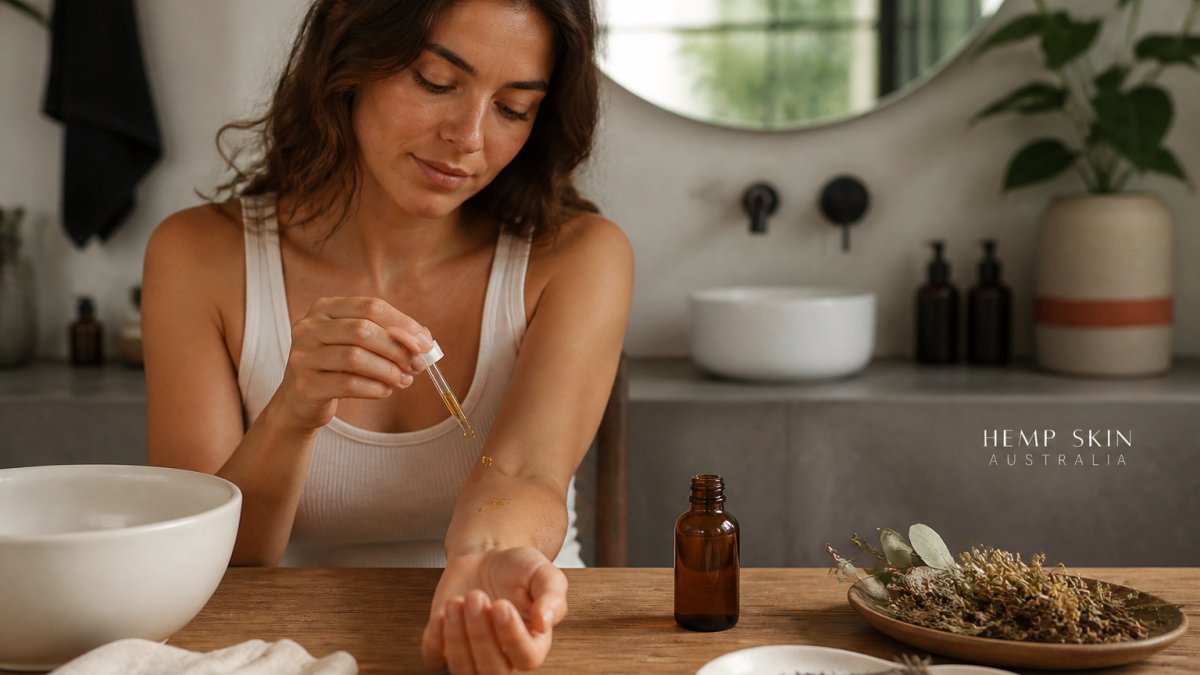
What you'll need:
Step 1: Start with clean, dry skin. Wash the area with a gentle cleanser and pat it dry. Do not apply anything else to that spot.
Step 2: Apply a small amount. Use one or two drops of oil, or a pea-sized amount of cream. Rub it in gently.
Step 3: Label the spot. Mark where you applied it so you can check the same place later. This matters if you test more than one product.
Step 4: Wait and watch. Leave the area alone for 24 to 48 hours. Do not wash it more than usual.
Step 5: Check for changes. Look for redness, itching, swelling, or tiny bumps. If nothing appears after 48 hours, the product is likely fine for your face.
Step 6: Test again if unsure. If you have very reactive skin, repeat the test on a second spot before using the product widely.
The inner forearm is the best place to start. The skin there is thin and sensitive, much like the skin around your eyes and cheeks. The side of the neck also works well for facial products.
Wait a full 48 hours before you decide. Some reactions appear within minutes, but others, especially sensitivity reactions, can take a day or two to show. If you are testing a stronger product, give it the full two days.
|
Timeframe |
What to Check |
What It Means |
|---|---|---|
|
First 15 minutes |
Immediate stinging or burning |
Stop and rinse at once |
|
24 hours |
Redness, itching, bumps |
Likely sensitivity, do not use |
|
48 hours |
Delayed redness or flaking |
Possible reaction, retest or avoid |
|
No change |
Skin looks and feels normal |
Product is likely safe to use |
A true hemp oil allergic reaction is rare, but it can happen. Symptoms usually appear within minutes to a few hours of contact.
Watch for these signs:
Most reactions are mild and settle once you wash the product off. But if you notice swelling of the face or throat, or any trouble breathing, seek medical help straight away. That is a sign of a serious reaction and needs urgent care.
If you have a known allergy to hemp, cannabis, or related plants, skip hemp skincare entirely and speak to your doctor first.
If skincare causes irritation, stop using the product at once and rinse the area with cool water. Then give your skin a few days of simple, gentle care to let it settle. Do not pile on more products to "fix" it.
Here is our calm recovery plan:
If the reaction spreads, blisters, or does not improve within a few days, see a doctor or dermatologist. Bring the product with you so they can check the ingredients.
Our Oil Cleanser is built for this exact moment. It uses ACO hemp seed oil with green tea, castor, and jojoba to cleanse without stripping your barrier, so it is a gentle first step back when your skin is feeling fragile.

Hemp oil for sensitive skin is often a good match, because it is light, calming, and low in the usual irritants. But "sensitive" covers a wide range, and not every sensitive skin is the same.
Hemp seed oil tends to suit:
Be cautious if you:
If you are unsure, ask your dermatologist before adding any new oil. A patch test is your friend either way.
The best hemp skincare is the one with a short, honest ingredient list. Fewer ingredients means fewer chances for a reaction, and it makes it far easier to spot what caused trouble if something goes wrong.
When you are reading labels, look for:
Our Daily Face Oil is made exactly this way. We cold-infuse ACO hemp seed oil with chamomile, calendula, and lavender, with no heat, so the botanicals stay gentle and potent. It is designed to calm redness and support reactive skin, and it is a good place to start if you want hemp without the extras.

If you prefer something richer for the evening, our Nightly Face Oil steeps organic hemp seed oil with blue lotus over six weeks for overnight barrier repair. And for the body, our Luxe Body Oil blends ACO hemp seed oil with grounding botanicals to soften and soothe after a shower.
Your skin is always talking to you. A patch test is simply how you learn to listen before you commit. Most irritation from hemp skincare comes from added fragrances and fillers, not the hemp itself, so a little care at the start saves a lot of trouble later.
At Hemp Skin, we craft our oils to work with sensitive skin, using organic hemp seed oil and botanicals chosen for calm, not clutter. Start with a patch test, keep your routine simple, and let your skin lead.
Ready to begin? Explore our hemp skincare range and find the blend that feels like home.
Yes, though it is uncommon with pure hemp seed oil. Irritation is more often triggered by added essential oils, fragrance, or preservatives in a formula rather than the hemp itself. If your skin stings, reddens, or itches after applying a hemp product, stop using it and patch test on your inner forearm for 24 to 48 hours before trying again. Cold-infused organic hemp seed oil, like the base in Hemp Skin's Daily Face Oil, is generally well tolerated because it is rich in omega fatty acids that support the skin barrier.
Cleanse a small area on your inner forearm or behind your ear, then apply a pea-sized amount of the oil and let it absorb. Leave it uncovered and avoid washing the area for 24 hours. Check for redness, itching, swelling, or tiny bumps. If your skin stays calm, repeat once more over the next day. Only then introduce the product to your face. A hemp oil patch test takes two days but saves weeks of discomfort if your skin is reactive.
Hemp oil allergic reaction symptoms include redness, itching, swelling, a rash of small bumps, or a burning sensation within minutes to hours of application. Contact dermatitis may appear as dry, scaly patches that develop over a day or two. Severe reactions such as hives spreading beyond the application site or difficulty breathing need urgent medical care. If you have a known allergy to cannabis or hemp plants, or to seeds and nuts, speak to your doctor before using hemp skincare.
Hemp oil for sensitive skin can work well because it is lightweight, non-comedogenic, and rich in omega-3 and omega-6 fatty acids that help calm inflammation and support the moisture barrier. The key is choosing a formula without added fragrance or harsh preservatives. Hemp Skin's Oil Cleanser uses ACO hemp seed oil with green tea and jojoba to soothe reactive skin, and the Daily Face Oil blends hemp with chamomile, calendula, and lavender. Always patch test first, even with gentle formulas.