


Buy your weekday smoothies and get your weekend ones for free. (7 for the price of 5!)
WELLNESSWEEK

Last Updated: November 21, 2026
Quick Summary
Yes, hemp oil absorption happens partly: some oil sinks into the upper skin layers while most stays on the surface softening and slowing water loss. Very little crosses the full skin barrier into the bloodstream through intact skin, so expect local comfort rather than systemic effects.
Can hemp oil be absorbed through the skin? Yes, partly, and the "partly" is where things get interesting. Hemp oil absorption is often described as if oil vanishes into your body like water into dry soil.
That distinction is the difference between a body oil that softens and comforts and a product making claims it cannot keep.
At Hemp Skin, we work with Australian hemp seed oil, and we love what it actually does rather than what marketing says it should.
First, the basics.
Your skin is not a sponge. It is a wall, and a clever one.
The outermost layer, the stratum corneum, is flattened skin cells packed with keratin and held together by lipids, a brick wall with mortar between the bricks.
Skin absorption happens when a substance crosses into the skin layers. Most topical products work in the upper layers only. That is not a failure.
If you want to understand this wall better and how to care for it, our guide on how to support your skin barrier with hemp goes deeper.
When someone asks whether hemp oil is absorbed, they usually mean one of four very different things.
That four-part map is the honest answer. Hemp oil is absorbed in the sense of points one and two, and only marginally, if at all, in the sense of point three.
Watch out: marketing that blurs these four meanings is the most common way a simple carrier oil gets dressed up as something it is not.
Once you separate surface, skin-layer, circulation and local effect, labels become easier to read. A product promising deep systemic delivery from a standard cream is overselling. A product promising softness, barrier support and a calming feel is describing exactly what a well-made hemp seed oil does.
Hemp seed oil is a lightweight plant oil rich in omega fatty acids, and it behaves like a classic emollient. It spreads across the surface, fills the tiny gaps between skin cells, and slows water loss. Some fatty acids settle into the upper layers and support softness there.
What it does not do is flood your bloodstream.
The practical takeaway is simple. Hemp seed oil for skin is a surface-and-upper-layer ingredient. Expect comfort, softness and glow, not a systemic effect.
Here is the myth we hear most: oil is only for dry skin. Not true.
Hemp seed oil is good for oily skin, and this surprises people. Its fatty acid profile is light rather than heavy.
Dry skin benefits for the obvious reasons: emollients soften and seal. Oily skin benefits because a light, non-greasy oil does not feel like a blanket.
If you are worried about clogged pores, our article on whether hemp seed oil is non-comedogenic answers that question properly.
CBD oil is a different creature from hemp seed oil, and CBD oil skin absorption deserves its own explanation.
CBD, or cannabidiol, is a cannabinoid. When applied to skin, researchers study two separate questions: how much stays local, and how much reaches the bloodstream.
Percutaneous absorption studies often use lab-grown skin or animal tissue, and results vary widely with formulation.
This is where honesty matters. Anyone promising dramatic bloodstream effects from a standard cream is overselling.
The difference between topical CBD and transdermal CBD is intent and design.
Topical products like creams, lotions, balms, salves and gels are made to sit on the skin and work locally. Transdermal delivery refers to formulations engineered to cross the barrier and reach circulation, often seen in patches, a much harder technical problem.
What labels often fail to explain:
Our advice: read the ingredient list, look for clear concentration information, and treat big claims with calm scepticism.
Most confusion starts with the word "hemp." Hemp seed oil and CBD oil come from the same plant but are not the same product.
| Feature | Hemp Seed Oil | CBD Oil |
|---|---|---|
| Source | Pressed from seeds | Extracted from flowers and leaves |
| Cannabinoids | Little to none | Contains cannabidiol |
| Main use | Moisturising, nourishment | Targeted local comfort |
| Texture | Light, silky | Varies by carrier oil |
| Best for | Daily skin and body care | Specific areas needing attention |
Hemp seed oil is the base for most of our face oils, body oils and beard oils. CBD oil is an extract, and it is regulated differently.
Neither is "better." They do different jobs. If your goal is daily hydration and barrier support, hemp seed oil is the sensible choice.
Applying hemp oil is not a chore to rush through. Done well, it becomes the best two minutes of your evening.
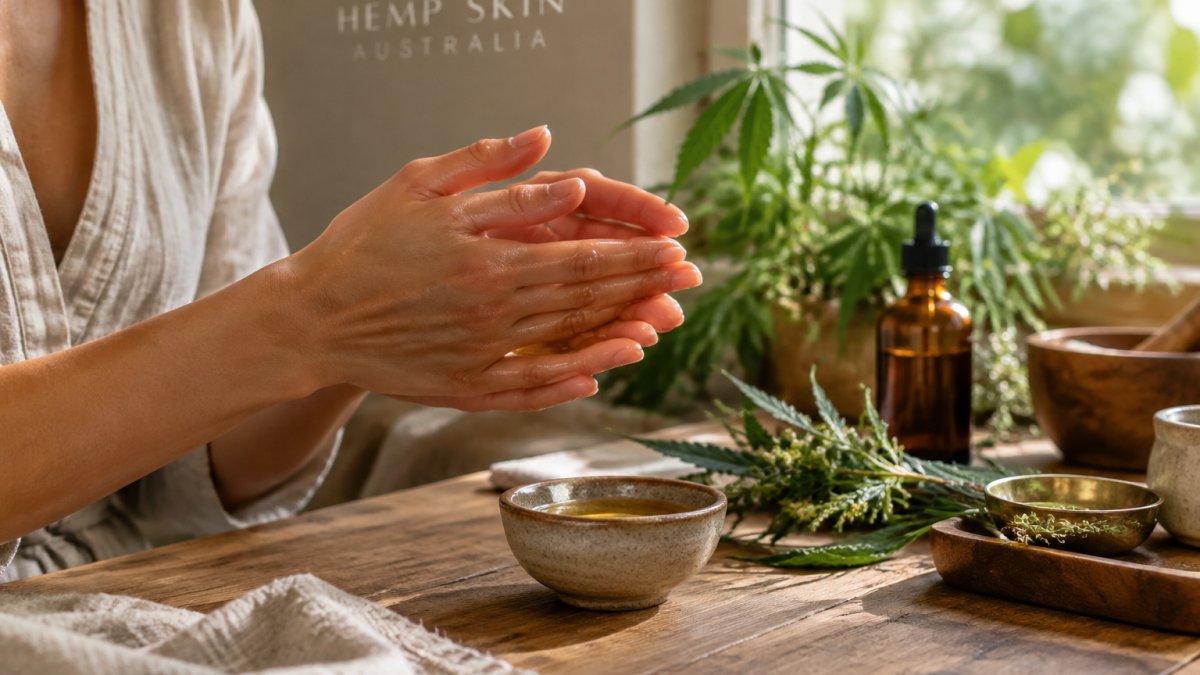
Here is how we would do it:
For the body, our Luxe Body Oil is made for exactly this: a slow press-and-massage ritual that leaves skin luminous and the mind quieter. If you want to understand the philosophy behind it, read the ritual of slow beauty.
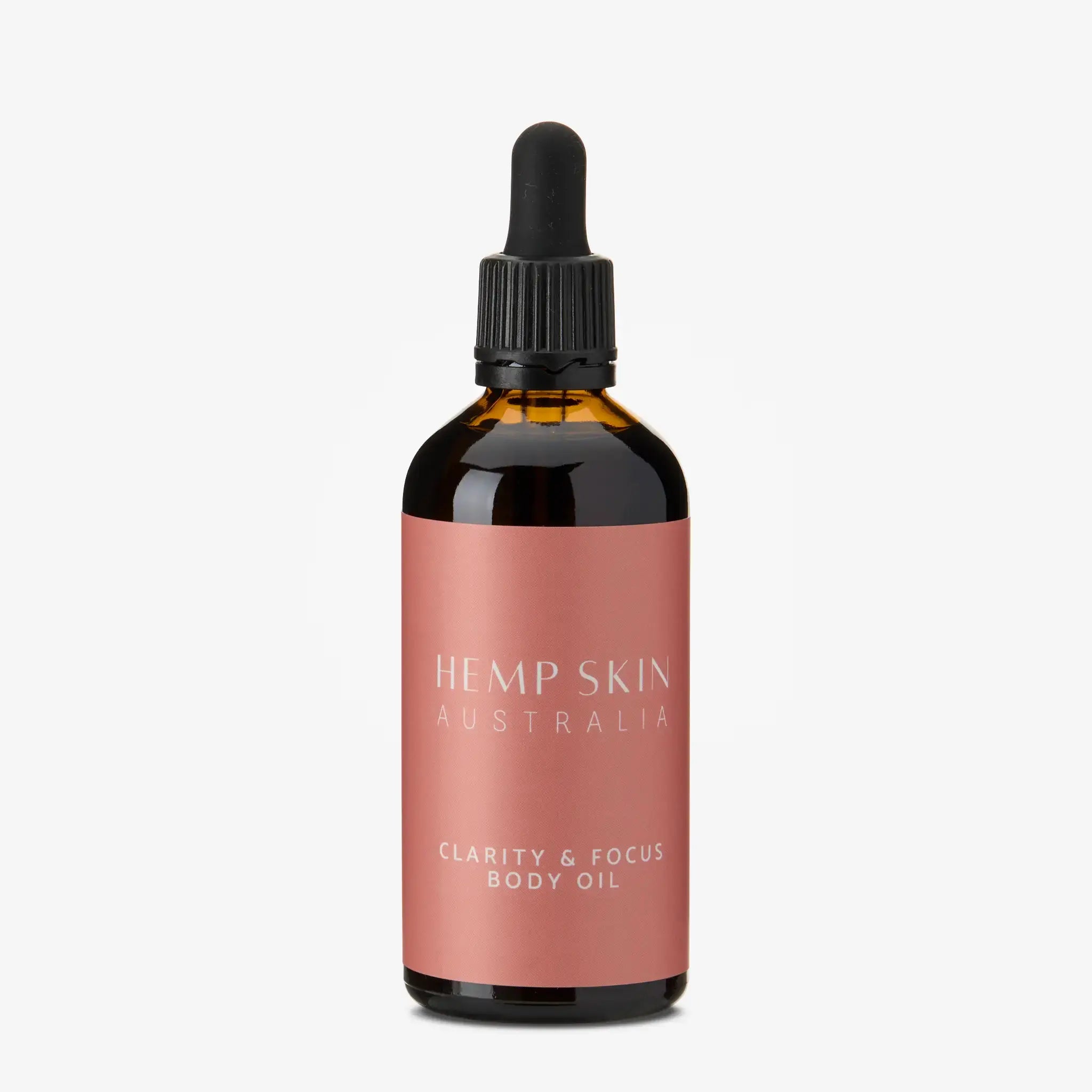
New products deserve a small test first, especially essential-oil blends even the gentle ones we use.
Apply a small amount to your inner forearm and wait. Watch for redness, itching or heat. If nothing appears, try a small area near your jaw before going full-face.
Our patch test guide walks through the signs to watch for and how to do it properly.
Watch out: applying a new oil to broken, inflamed or freshly shaved skin tells you nothing useful and may sting. Test on calm skin instead.
Myths about absorption spread easily because the science is genuinely fiddly. Here are the ones we hear most, paired with what is actually going on and what it means for your routine.
Patch testing tells you more about your own skin than any general rule.
Myth four: "Anything on your skin enters your bloodstream." The skin barrier exists precisely to limit that. Some molecules cross; most do not.
Absorption is not a fixed property of an oil. It shifts with several practical factors, and understanding them helps you choose and apply products with more intention.
A few sensible cautions apply.
None of this is meant to frighten you away from a beautiful oil. It is simply the quiet, grounded care that makes a ritual feel safe as well as sensorial.
Start with what your skin is asking for.
For daily body nourishment, a light body oil pressed into damp skin is the simplest place to begin.
At Hemp Skin, our products are made in small batches with intention.
Your skin does not need a dozen products. It needs a few good ones, applied with attention.
If you are ready to slow down and build a ritual that honours both your skin and your senses, explore the Hemp Skin range.
Get started with Hemp Skin and turn your daily skincare into a moment that is truly yours.
Hemp seed oil is a nourishing plant oil used for hydration and barrier support on the skin's surface.
Hemp seed oil is pressed from the seeds of the hemp plant. It is a nourishing botanical oil used for hydration and barrier support. When you see hemp seed oil for skin, it refers to the seed oil, not CBD. They serve different purposes, and hemp seed oil is the gentler, more universally tolerated option for daily skincare rituals.
Essential oil blends and other botanical additions can trigger reactions in sensitive skin. Patch test any new product on your inner forearm for 24 hours before applying it to your face. If you have eczema or rosacea, introduce one product at a time and keep your routine simple. Hemp Skin recommends patch testing all essential-oil blends, and avoiding broken or inflamed skin when using tools like silicone suction cups or facial brushes.
For a facial ritual, press a few drops into slightly damp skin after cleansing. For body oils, apply after showering while skin is still dewy and dress as normal. Pre-shower oils are massaged in before washing and rinsed away, while the Sacred Scalp Elixir is applied before washing and left for 20 minutes or longer.
